
AI consulting for SMEs, consultancies and organisations
AI that makes a real difference to your work.
Whether your team uses AI for proposals, reports or research, the question is how it fits the work. Together, we examine where it helps, where it creates rework and how to protect quality and confidential knowledge. We develop working practices that fit your team.
Around 30 minutes, with no obligation. We discuss a workflow from your day-to-day work and clarify where consulting could help.
Common tasks in SMEs, consultancies and agencies
Where AI can help your team.
Which of these tasks matters to your team? We start where you already use AI or see a clear need.
Proposals and reports
AI produces drafts, but figures, claims and tone still need checking. We clarify which templates and sources to use and how your team reviews the results.
Research and team knowledge
Knowledge sits in files, projects and people’s experience. We clarify which sources AI may use and how your team can trace and check its answers.
Project work and documentation
Minutes, decisions and next steps need to fit together. We examine what AI can prepare and where responsibility and approval remain with people.
Our approach
Develop your team’s use of AI with a clear purpose.
Understand the starting point
Where is AI already used? What needs to improve — and what must remain protected?
Agree on shared rules
We clarify which knowledge is used, who checks the results and where approval is required.
Test improvements in everyday work
We test changes in a specific workflow and assess quality, effort and value together. Your team can continue with what proves useful.
Hafelekar in practice
We start with your work.
Together, we examine a specific workflow: Where does it take unnecessary time? What knowledge is needed? Which results must be checked? Only then do we decide where AI can usefully support the work.
- Your team works with its own examples rather than generic demonstrations.
- Rules and responsibilities are agreed together.
- You have a clear basis for deciding which changes your team should continue with.
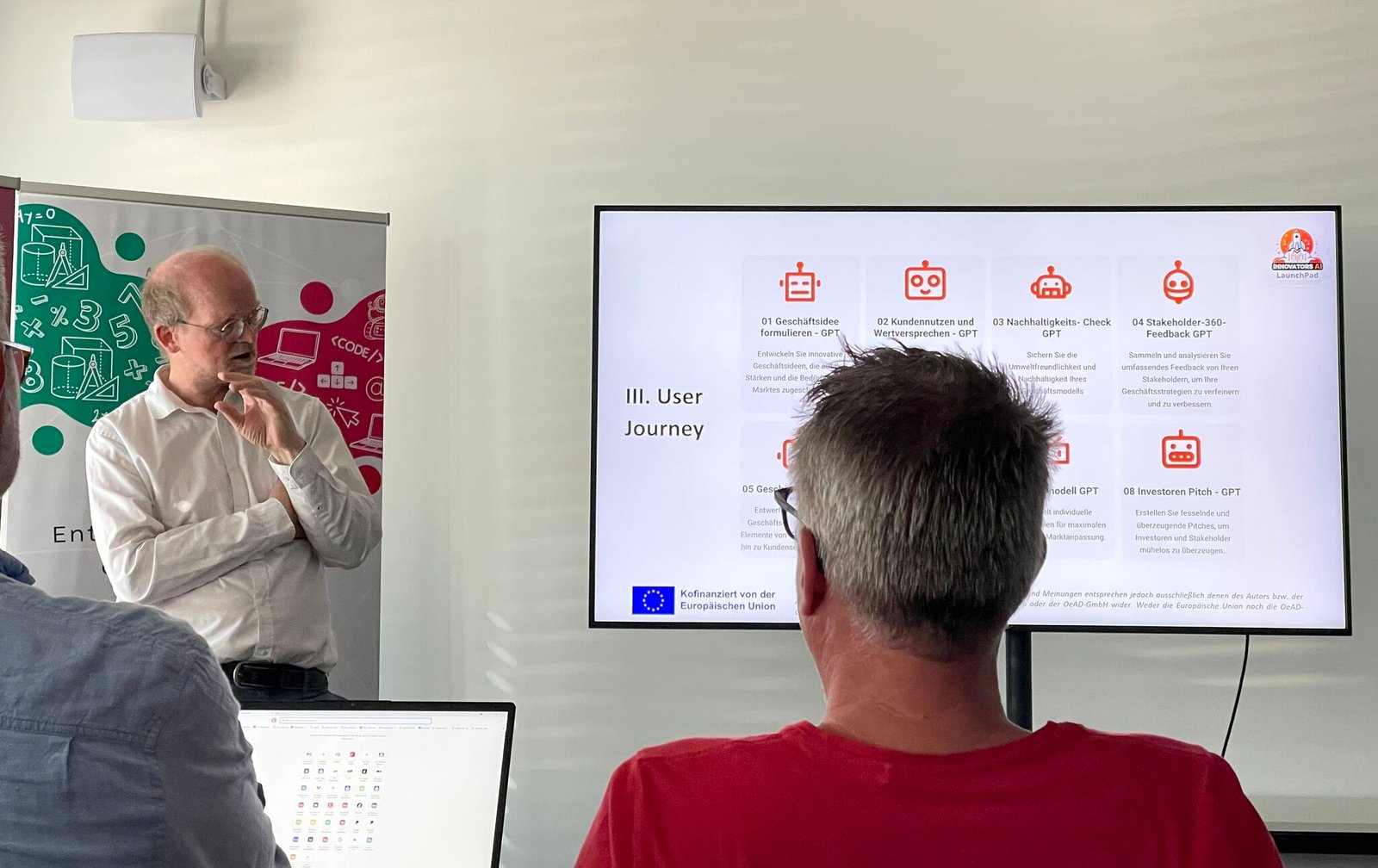
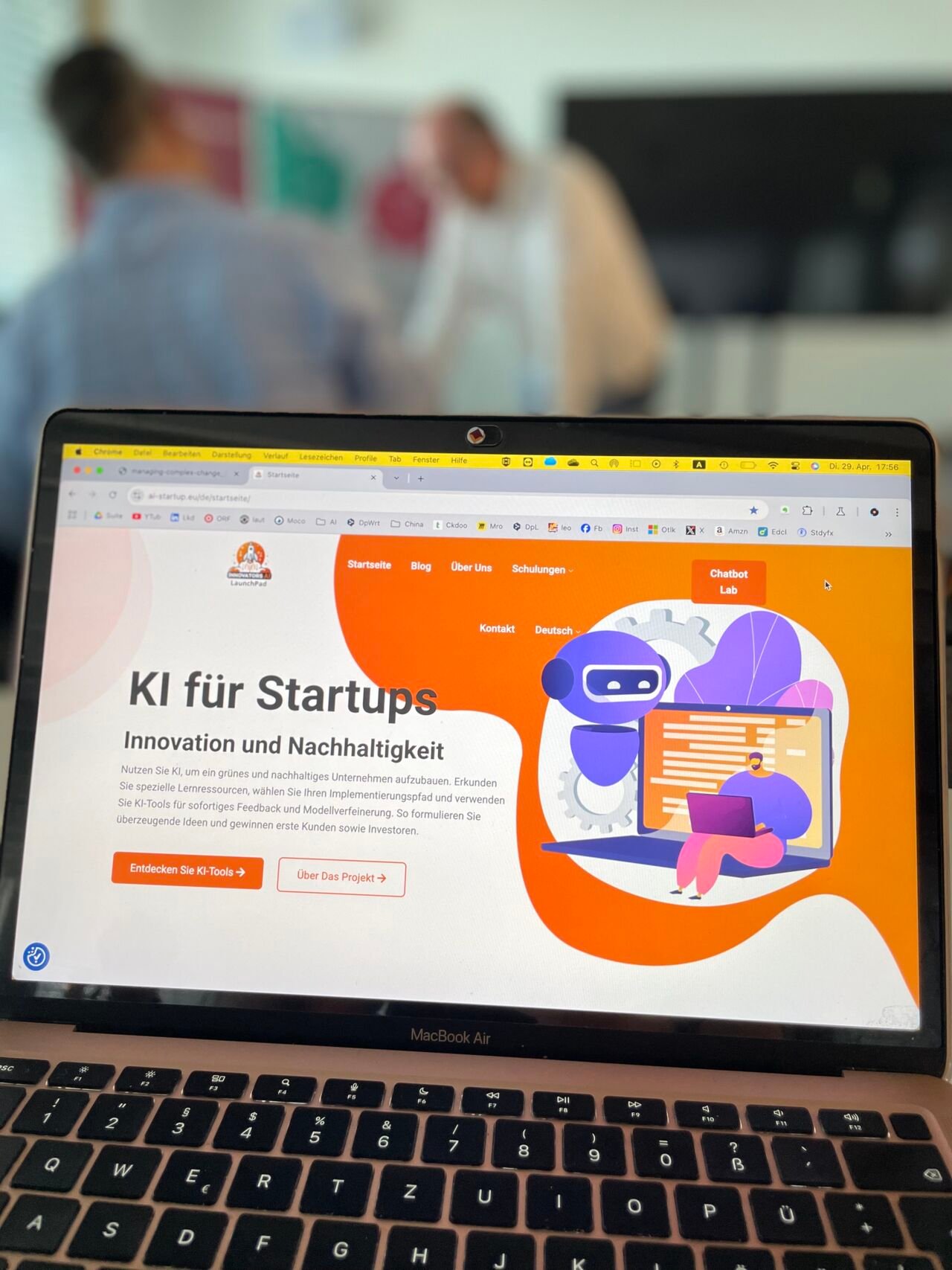
One example of our work with AI is EcoInnovate AI+: Hafelekar worked on AI-supported EduBots, methodology, curriculum and training.
A conversation as the first step
Let’s discuss your work.
Tell us briefly about a task where AI could support your team or currently creates rework. In a non-binding conversation of around 30 minutes, we discuss what should improve, which requirements matter and a sensible next step. We read your enquiry and contact you personally to arrange the conversation.
- no obligation and confidential
- no completed AI strategy required
- a practical look at your day-to-day work
Hafelekar Unternehmensberatung Schober GmbH
3040 Neulengbach · Austria
What would you like to discuss?
One to three sentences about your needs are enough. Details about your organisation and current use of AI are optional.
Please do not include confidential client information or send internal documents.
Would you prefer to email us directly? office@hafelekar.at
Our digital AI tools remain available on hafelekar.ai.
Who we work with
For teams doing demanding knowledge work.
SMEs
When AI is already part of everyday work, but a dedicated AI team is neither practical nor realistic.
Consultancies and agencies
When quality, experience and reliable collaboration directly shape the value you deliver to clients.
Public and non-profit organisations
When traceability, responsibility and careful handling of knowledge are essential.
Our development work
Consulting and development belong together.
Hafelekar also develops its own AI tools. Our consulting starts with your workflow and does not require a particular system.
See Mission Control
Mission Control brings tasks, verified knowledge, checks and approvals together in one place. This view shows our internal development, not a product you can book.
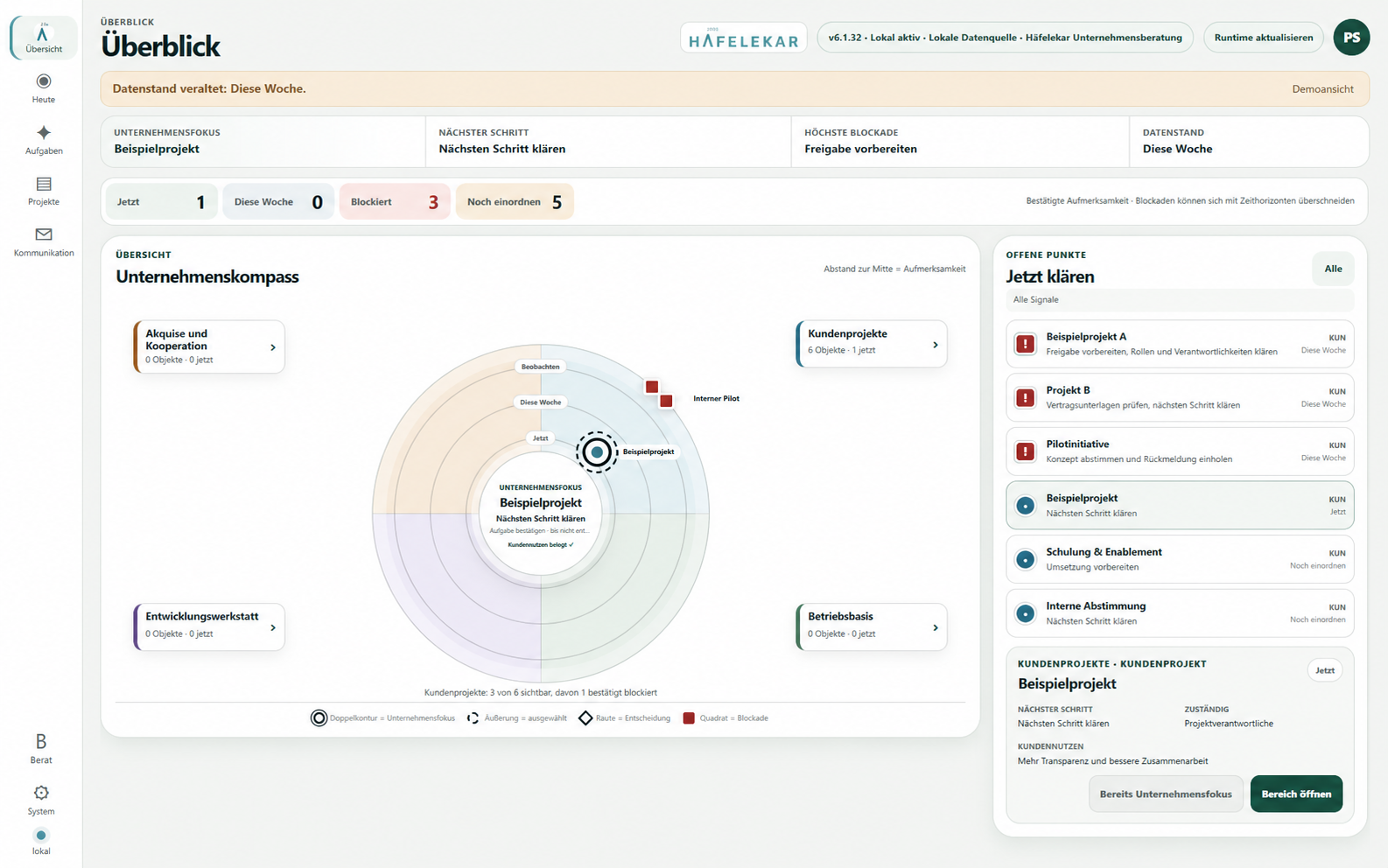
Find more about Haf AIOS and our digital AI tools on hafelekar.ai.
Frequently asked questions
Clarity before you start.
Can we enquire about AI consulting now?
Yes. In an initial conversation, we clarify your needs and discuss possible collaboration. Consulting is independent of Mission Control, which is being tested internally and is not yet available as a product.
Do we need an AI strategy already?
No. A specific problem, an existing workflow or a question about how your team actually uses AI can be a useful starting point.
Do you also work with clients in person?
Yes. Hafelekar is based in Neulengbach and works with organisations in Lower Austria, Vienna, Tyrol and Salzburg, as well as online.
How do we start if people in our team already use AI in different ways?
We first look at the tools and workflows already in use. Together, we clarify where AI could genuinely reduce the workload, what knowledge is needed and which results must be checked. This helps us identify the workflows, rules or skills that should be developed further.
Who checks the results of an AI pilot?
Before the pilot, we agree who checks the results, which sources they use and which decisions require approval. Responsibility remains with the designated people in the team.
How do we know whether the pilot is working?
We agree in advance what should improve in the selected workflow and which quality requirements apply. During the trial, we record what works, where errors or additional effort arise and what the team reports. We then decide together whether and how to continue with the workflow.